Drop sets
A drop set is a set taken to or near failure, after which you lower the weight, usually by about 20–25%, and keep going without rest [1][6]. In studies, drop sets built similar muscle to ordinary sets in less time [1].
What is a drop set?
A drop set starts like an ordinary set: you lift a weight until you can't do another good repetition, or nearly so. Then you take some weight off, around 20–25% in common practice, and carry on straight away. You can repeat the drop once or several times [1][6].
Each drop lets you keep working the same muscle after the heavier weight stopped you. The whole sequence counts as one long set.
Types of drop set
One drop or several #
Studies have used anything from one or two drops of about 20% to a long descending run. One study took dumbbell curls from 80% of a one-repetition maximum down through 65%, 50% and 40% to 30% without rest [1][4]; another used three drops of about 20% after a set taken to failure [1][2].
How to do a drop set
- Choose an exercise where the weight changes quickly. A pin-loaded machine, a cable stack or a rack of dumbbells.
- Do the first set close to failure. In the studies the first set was taken to failure [1][2].
- Lower the weight by about 20–25%. That is the drop described in reviews of the method [1][6].
- Keep going with no planned rest. Do as many repetitions as you can at the lower weight [1][6].
- Repeat the drop if you planned more than one. Studies used anywhere from one drop to several [1].
Example: a drop set with three drops
EXAMPLE (SAMPLE NUMBERS)
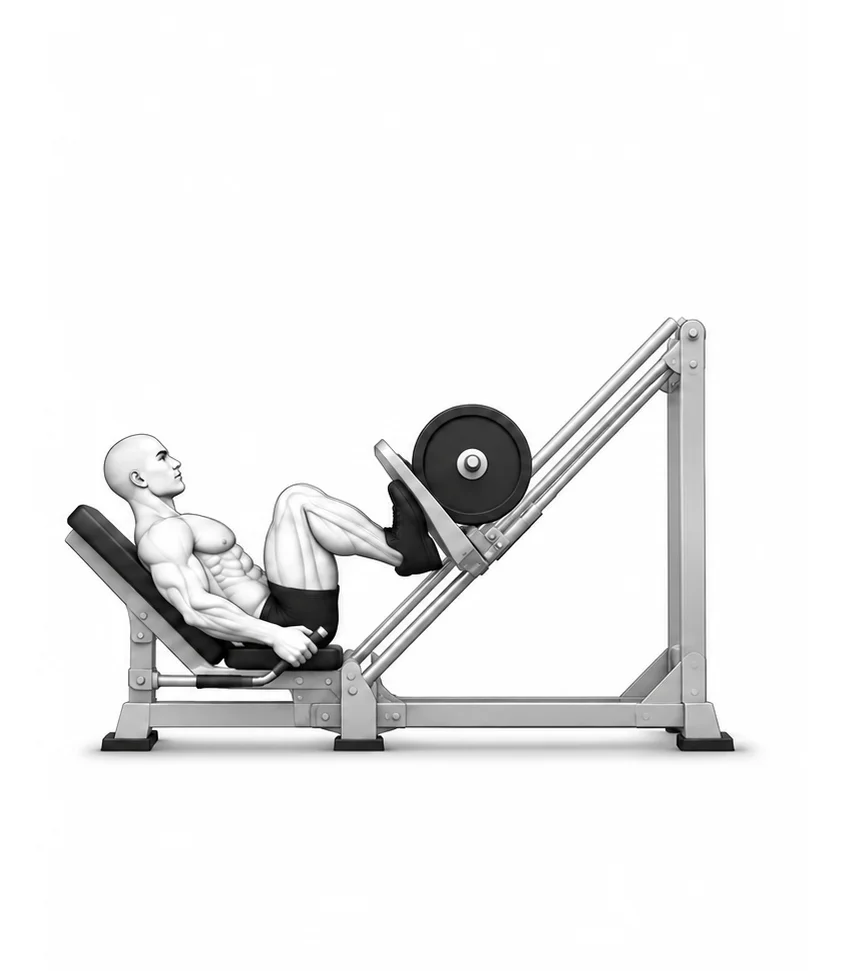
- Leg Press 240 lb × 10, close to failure.
- Drop to 190 lb (about 20% less) × 8.
- Drop to 150 lb × 8.
- Drop to 120 lb × 7.
One drop set: 33 repetitions across four weights, with no planned rest between them.
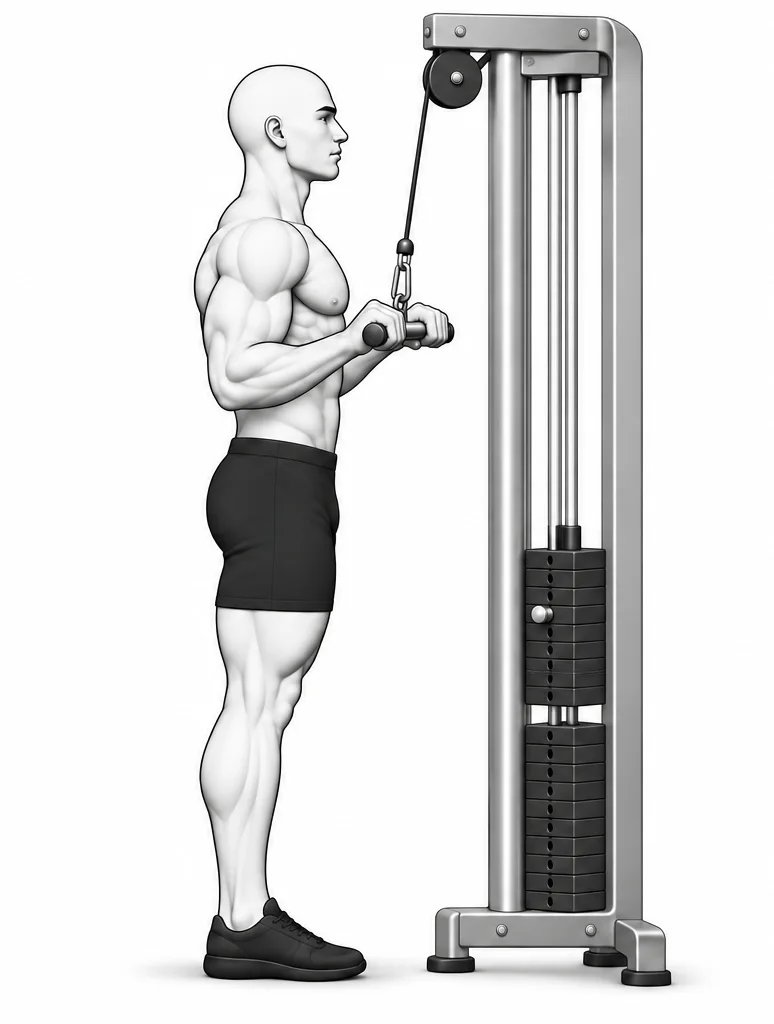
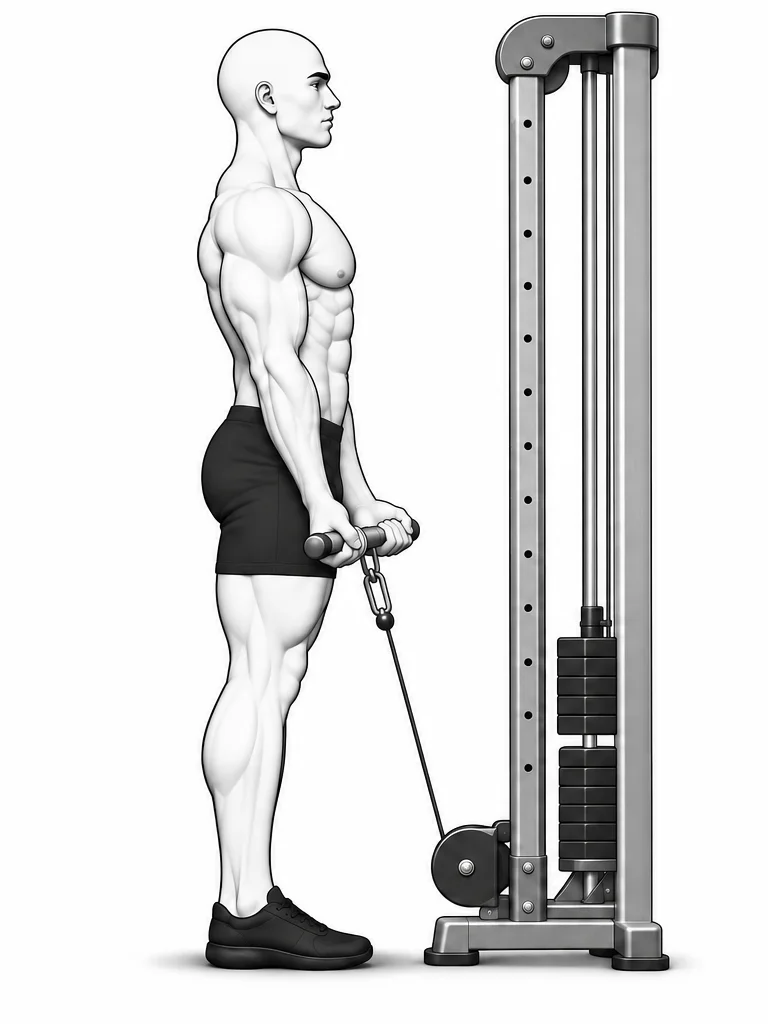
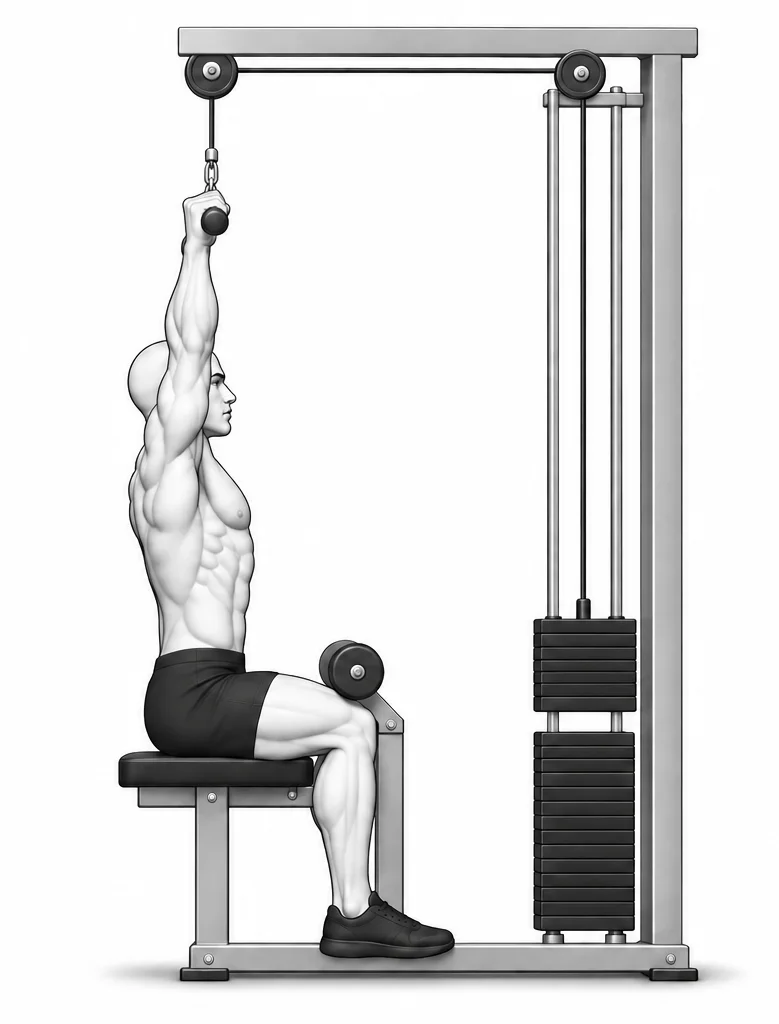
Studies have used one drop set in place of three ordinary sets. In one, a single drop set on the triceps pushdown (12 repetitions to failure, then three drops of about 20%) was compared with three sets of 12 [1][2].
Which exercises suit drop sets?
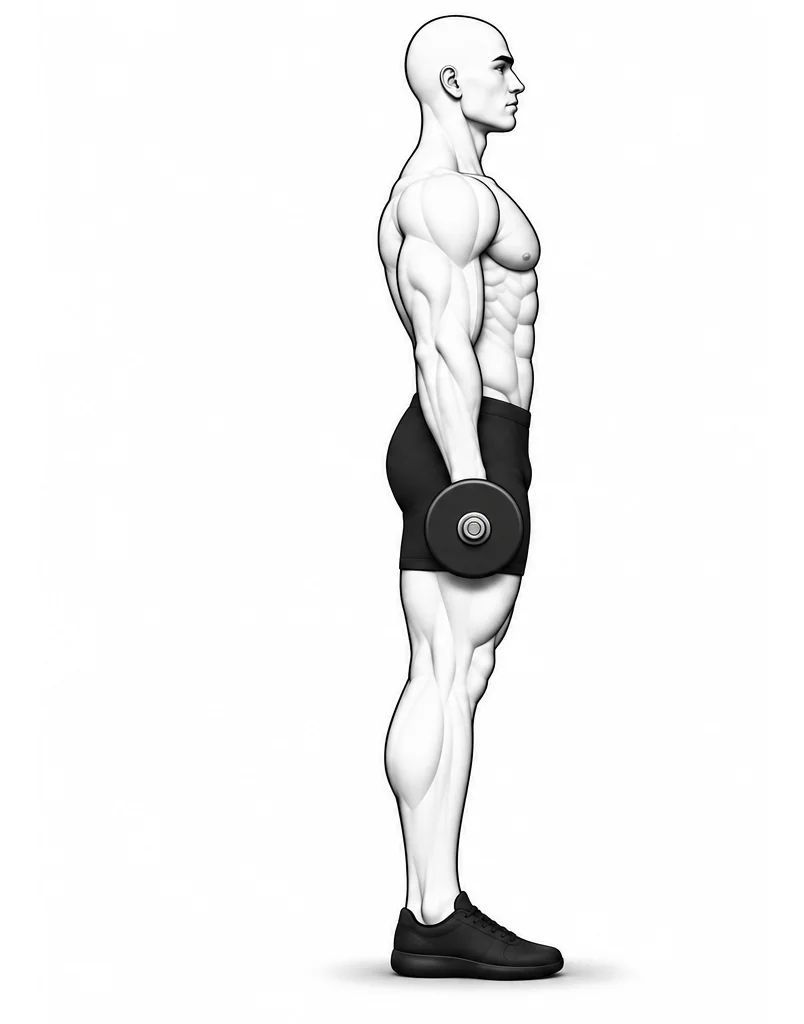
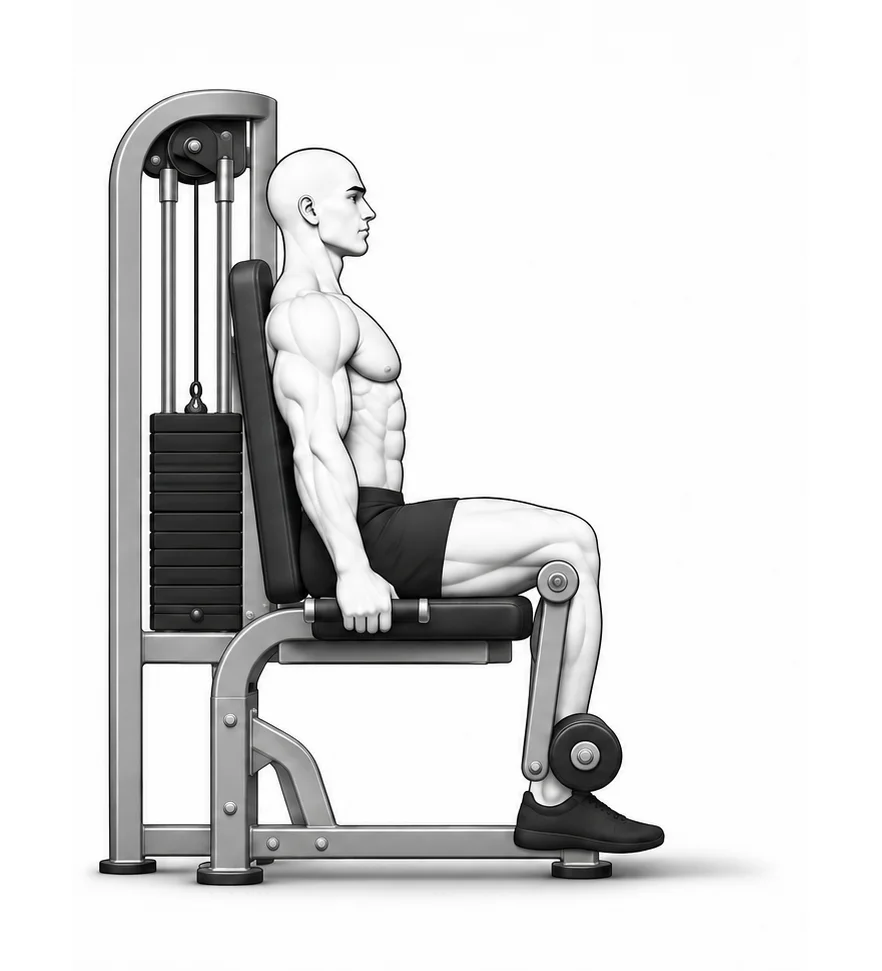
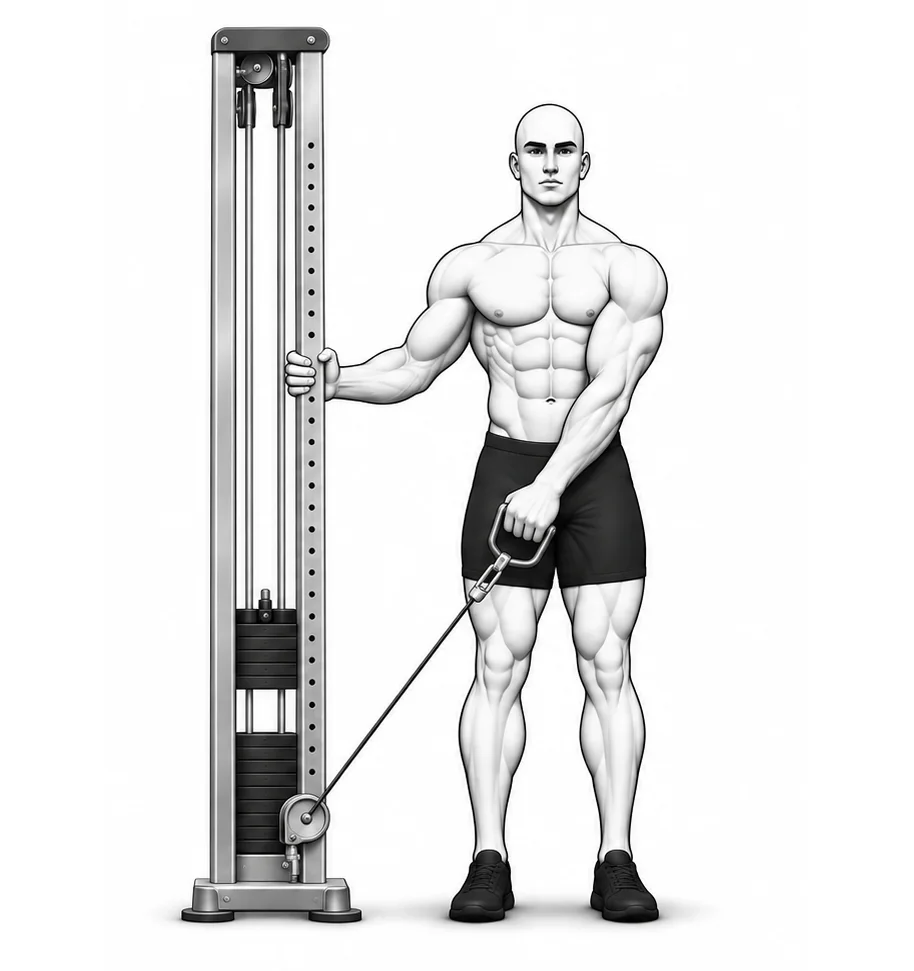
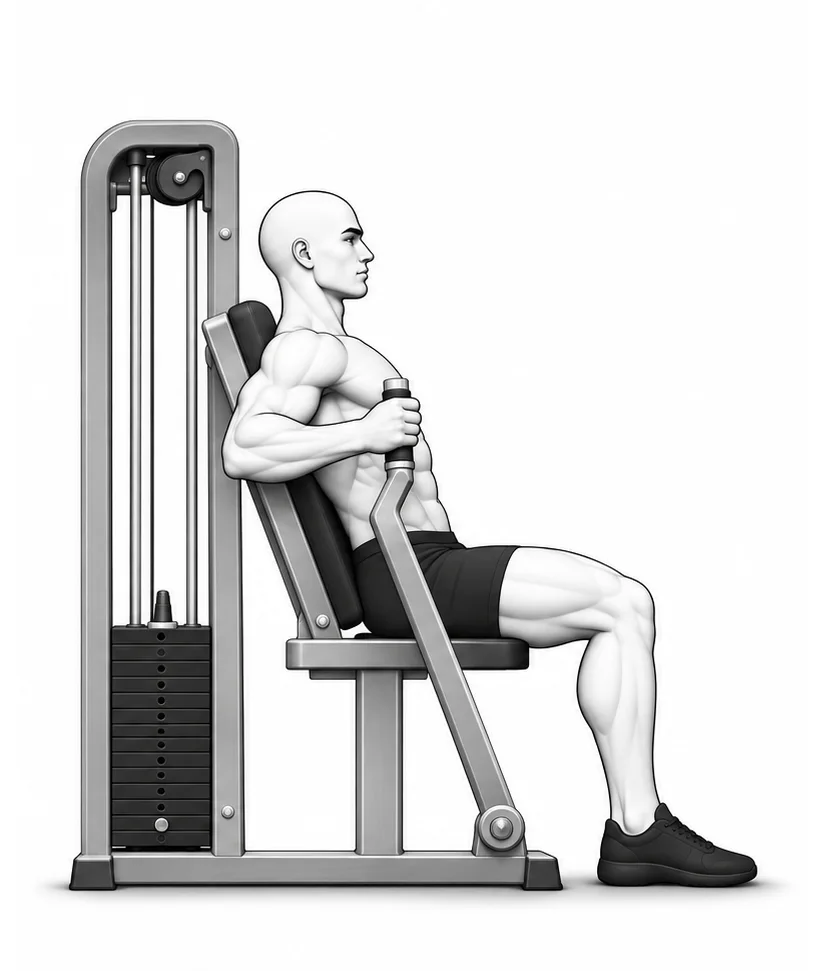
Exercises where you can change the weight in seconds. The research used a triceps pushdown [2], dumbbell curls [4], and the leg press and leg extension [3]: a cable stack, dumbbells and machines.
On a machine or cable stack the drop is a pin move, and with dumbbells it is a swap to a lighter pair. A barbell drop needs plates taken off, which adds a pause.
Common drop set mistakes
Resting between drops. A drop set works by continuing straight away [1][6]. A long pause makes it a series of separate sets.
Dropping too little. If the next weight is barely lighter you won't get many repetitions. Reviews describe drops of about 20–25% [1][6].
Comparing drop sets with ordinary sets. The totals are built differently. Compare a drop set with your last drop set on the same exercise.
Expecting extra strength. Drop sets felt harder than ordinary sets in one study (effort 7.7 against 5.3 out of 10) [2], and they did not add strength beyond ordinary training [2][3].
How drop sets compare
Drop set vs superset #
A drop set keeps to one exercise and lowers the weight; a superset moves between two exercises. Both cut rest out of a session [1][6].
Drop set vs rest-pause #
Rest-pause keeps the same weight and adds short rests; a drop set lowers the weight and doesn't rest. With training volume matched, both produced similar muscle growth to ordinary sets [5].
What the research tested
One drop set against three sets (Fink et al., 2018) #
Sixteen young men trained the triceps pushdown for 6 weeks: one drop set (a 12-repetition maximum to failure, then three drops of about 20%) against three sets of 12 with 90-second rests [1][2]. Triceps size rose 10.0% against 5.1%, though the difference between groups was not statistically clear [1]; 12-repetition strength rose 16.1% against 25.2%, and the drop set felt harder (7.7 against 5.3 out of 10) [2].
Trained men, volume matched (Angleri et al., 2017) #
Thirty-two trained men trained one leg each way for 12 weeks with total volume equalised: traditional sets of 6–12 at 75% of a one-repetition maximum, or drop sets taken to failure. Thigh muscle grew 7.6% and 7.8%; leg press strength rose 25.9% and 24.9% [3].
A single long drop set (Ozaki et al., 2018) #
Nine untrained men did dumbbell curls for 8 weeks, each arm assigned to three sets at 80% of a one-repetition maximum, three sets at 30%, or one set at 80% dropped all the way to 30%. Arm muscle grew similarly in all three. Strength rose only with the 80% and drop-set conditions, endurance only with the 30% and drop-set conditions, and the drop set took the least time [4].
Do drop sets work?
For muscle growth, drop sets did about as well as ordinary sets in less time. A meta-analysis of 6 studies (142 people) found no difference in muscle growth between drop sets and traditional sets [1]. Some drop-set sessions took a half to a third of the time [1].
In trained men, 12 weeks of drop sets gave the same growth and strength as ordinary training with equal volume: thigh muscle grew about 7.8% against 7.6% [3]. In untrained men, a single drop set on curls grew the arm muscle as much as three ordinary sets, and was the only condition that improved both strength and endurance [4].
Drop sets did not add strength beyond ordinary sets: in one study, 12-repetition strength rose 16% with drop sets and 25% with ordinary sets [2]. The studies are small and short, so the evidence is still limited [1][6].
How Liftometry records a drop set
See how Liftometry records drop sets #
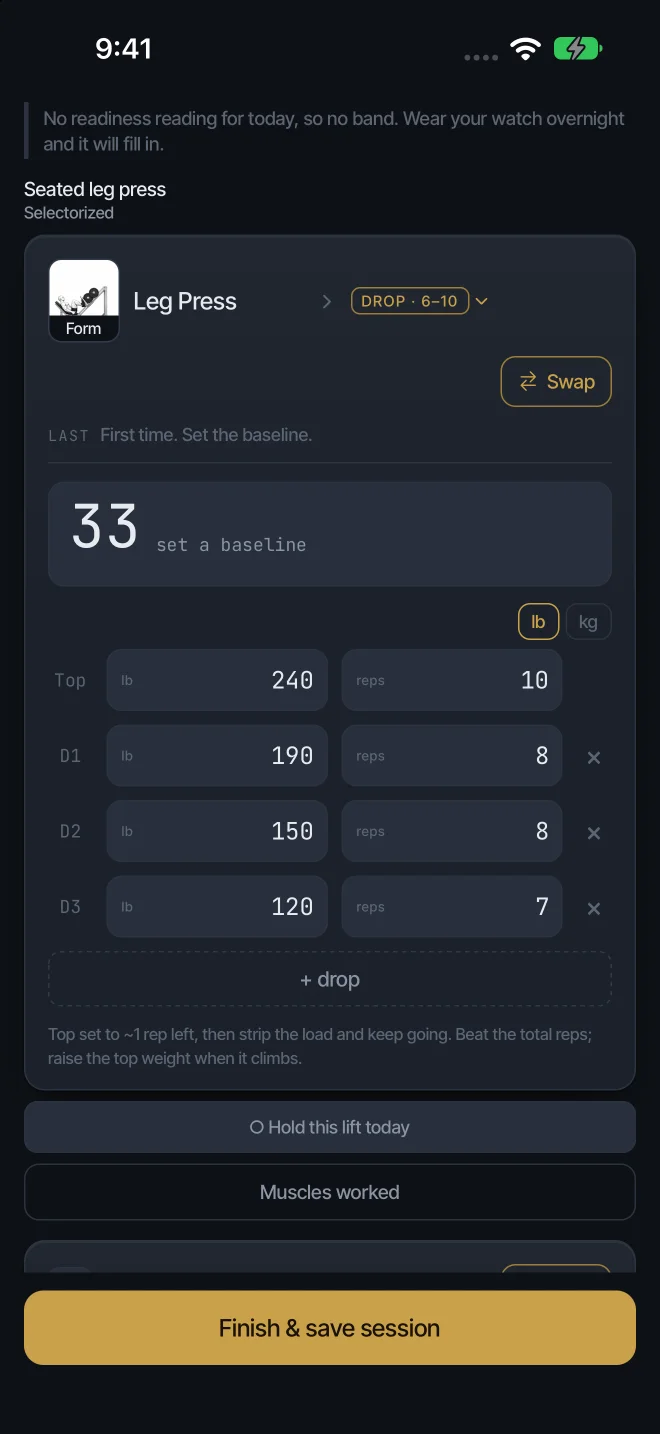
In Liftometry, Drop is one of five set methods. Choose it from the method badge on the lift's card. Log the first set, then add each drop with + drop, each with its own weight and reps. Between drops, the phone runs a short 15-second rest.
How Liftometry scores it #
Drop sets are scored on load. A drop set is a PR when its first set is heavier than any before, or when it beats your best total reps with a first set at least as heavy. Your first drop set sets the record; it is not a PR.
In the weekly volume by muscle on the Progress tab, each stage of a drop set counts as one hard set.
On Apple Watch #
Drop sets are logged on the phone, not the Watch. If you reach one on the Watch, it says Finish this one on your phone.
Questions people ask
What is a drop set? #
One set taken to or near failure, then the weight is lowered by about 20–25% and you continue without resting, sometimes for several drops [1][6].
What is a drop sets workout? #
A session where some exercises end in a drop set, often in place of extra ordinary sets. Studies used one drop set where a usual workout would do three sets [1][2].
What's the difference between a drop set and a superset? #
A drop set stays on one exercise and lowers the weight; a superset moves between two exercises [1][6]. See supersets.
Does a drop set count as one set? #
In the research, yes: one drop set was compared with three ordinary sets [2]. Liftometry's weekly volume chart counts each stage of a drop set as a hard set.
More set method guides
Next guide: Myo-reps. Also: Supersets, Rest-pause sets, or all set method guides.
Lifts it suits
Sources
- 1Sødal LK, Kristiansen E, Larsen S, van den Tillaar R. Effects of drop sets on skeletal muscle hypertrophy: a systematic review and meta-analysis. Sports Med Open. 2023;9(1):66. pubmed.ncbi.nlm.nih.gov/37523092
- 2Fink J, Schoenfeld BJ, Kikuchi N, Nakazato K. Effects of drop set resistance training on acute stress indicators and long-term muscle hypertrophy and strength. J Sports Med Phys Fitness. 2018;58(5):597–605. pubmed.ncbi.nlm.nih.gov/28474868
- 3Angleri V, Ugrinowitsch C, Libardi CA. Crescent pyramid and drop-set systems do not promote greater strength gains, muscle hypertrophy, and changes on muscle architecture compared with traditional resistance training in well-trained men. Eur J Appl Physiol. 2017;117(2):359–69. pubmed.ncbi.nlm.nih.gov/28130627
- 4Ozaki H, Kubota A, Natsume T, et al. Effects of drop sets with resistance training on increases in muscle CSA, strength, and endurance: a pilot study. J Sports Sci. 2018;36(6):691–6. pubmed.ncbi.nlm.nih.gov/28532248
- 5Enes A, Alves RC, Schoenfeld BJ, et al. Rest-pause and drop-set training elicit similar strength and hypertrophy adaptations compared with traditional sets in resistance-trained males. Appl Physiol Nutr Metab. 2021;46(11):1417–24. pubmed.ncbi.nlm.nih.gov/34260860
- 6Krzysztofik M, Wilk M, Wojdała G, Gołaś A. Maximizing muscle hypertrophy: a systematic review of advanced resistance training techniques and methods. Int J Environ Res Public Health. 2019;16(24):4897. pubmed.ncbi.nlm.nih.gov/31817252